Diarrhea
ZIIHERA can cause severe diarrhea.
When ZIIHERA is used in combination with fluoropyrimidine- and platinum-containing chemotherapy with or without tislelizumab-jsgr, severe, life threatening, and fatal cases of diarrhea can occur despite loperamide prophylaxis. The risk of severe and life threatening diarrhea is higher when ZIIHERA is administered with chemotherapy and tislelizumab-jsgr, with a higher risk in patients aged ≥ 65 years compared to younger patients. Advise patients to increase oral fluids, begin antidiarrheals, and notify their healthcare provider immediately if diarrhea occurs.
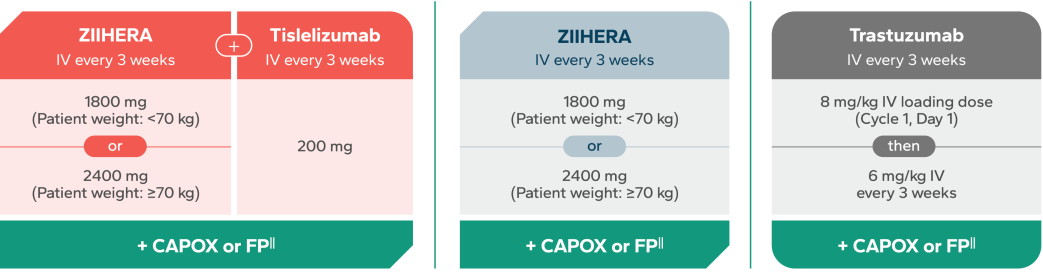
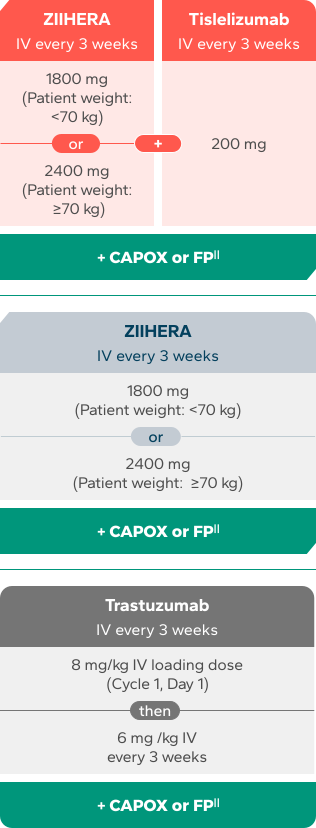
Administer antidiarrheal prophylaxis with loperamide in cycle 1 for all patients receiving ZIIHERA in combination with fluoropyrimidine- and platinum-containing chemotherapy with or without tislelizumab-jsgr. Begin loperamide at the first loose stool when ZIIHERA is administered in combination with chemotherapy. Administer fluids, electrolytes, and additional antidiarrheal agents as necessary. Before modifying the dose of ZIIHERA, evaluate, modify or discontinue drug(s) contributing to diarrhea in accordance with their respective prescribing information. Withhold, reduce the dose, or permanently discontinue ZIIHERA based on severity.
If treating patients with ZIIHERA in combination with FOLFOX, do not administer the fluorouracil bolus.
ZIIHERA in combination with chemotherapy and tislelizumab-jsgr
Diarrhea was reported in 85% of 330 patients in clinical studies, including Grade 4 (2.1%), Grade 3 (24%), and Grade 2 (31%) events. Fatal outcomes resulting from diarrhea occurred in 1.5% of patients. Diarrhea leading to dose reduction of ZIIHERA occurred in 10% of patients, and permanent discontinuation of ZIIHERA occurred in 3.9% of patients.
In cycle 1, diarrhea at Grade 4 severity occurred in 1.5% and Grade 3 severity occurred in 15% of patients despite use of loperamide prophylaxis. The median time to onset for cycle 1 diarrhea was 6 days and median time to resolution was 18 days.
ZIIHERA in combination with chemotherapy
Diarrhea was reported in 81% of 395 patients in clinical studies, including Grade 4 (1.3%), Grade 3 (20%) and Grade 2 (33%). Diarrhea leading to dose reduction of ZIIHERA occurred in 10% of patients, and permanent discontinuation of ZIIHERA occurred in 1.8% of patients.
In cycle 1, diarrhea at Grade 4 severity occurred in 0.8% and Grade 3 severity occurred in 14% of patients despite use of loperamide prophylaxis. The median time to onset for cycle 1 diarrhea was 6 days and median time to resolution was 18 days.
Embryo-Fetal Toxicity
Based on the mechanism of action, ZIIHERA can cause fetal harm when administered to a pregnant woman. There are no human or animal data on the use of ZIIHERA in pregnancy. In literature reports, use of a HER2-directed antibody during pregnancy resulted in cases of oligohydramnios and oligohydramnios sequence manifesting as pulmonary hypoplasia, skeletal abnormalities, and neonatal death.
Verify the pregnancy status of females of reproductive potential prior to the initiation of ZIIHERA. Advise pregnant women and females of reproductive potential that exposure to ZIIHERA during pregnancy or within 4 months prior to conception can result in fetal harm. Advise females of reproductive potential to use effective contraception while receiving ZIIHERA and for 4 months following the last dose of ZIIHERA.
Left Ventricular Dysfunction (LVD)
ZIIHERA can cause decreases in left ventricular ejection fraction (LVEF).
Assess LVEF prior to initiation of ZIIHERA and at regular intervals during treatment. Withhold dose or permanently discontinue ZIIHERA based on severity of adverse reactions.
The safety of ZIIHERA has not been established in patients with a baseline ejection fraction that is < 50%.
ZIIHERA in combination with chemotherapy and tislelizumab-jsgr
LVEF decrease (an absolute decline in LVEF of > 10%, resulting in a final value of < 50%) was observed in 9% of 330 patients in clinical studies. LVD leading to permanent discontinuation of ZIIHERA was reported in 3% of patients. Fatal outcomes due to LVD occurred in one patient (0.3%). The median time to first occurrence of LVD was 6.9 months (range: 1.2 to 29.1 months). LVD resolved in 78% of patients.
ZIIHERA in combination with chemotherapy
LVEF decrease was observed in 5% of 395 patients. LVD leading to permanent discontinuation of ZIIHERA was reported in 1.0% of patients. The median time to first occurrence of LVD was 6.0 months (range: 1.4 to 15.0 months). LVD resolved in 70% of patients.
Infusion-Related Reactions
ZIIHERA can cause infusion-related reactions (IRRs).
Prior to each dose of ZIIHERA, administer premedication to prevent potential IRRs. Monitor patients for signs and symptoms of IRR during ZIIHERA administration and as clinically indicated after completion of infusion. Have medications and emergency equipment to treat IRRs available for immediate use.
If an IRR occurs, slow or stop the infusion, and administer appropriate medical management. Monitor patients until complete resolution of signs and symptoms before resuming. Permanently discontinue ZIIHERA in patients with recurrent severe or life-threatening IRRs.
ZIIHERA in combination with chemotherapy and tislelizumab-jsgr
An IRR was reported in 22% of 330 patients in clinical studies, including Grade 4 (0.3%), Grade 3 (1.2%), and Grade 2 (16%) despite use of prophylaxis. IRRs leading to permanent discontinuation of ZIIHERA were reported in 0.3% of patients. IRRs occurred on the first day of dosing in 17% of patients. Of all patients who experienced IRRs, 60% of reactions resolved within the first day.
ZIIHERA in combination with chemotherapy
An IRR was reported in 24% of 395 patients in clinical studies, including Grade 4 (0.3%), Grade 3 (1.5%), and Grade 2 (18%) despite use of prophylaxis. IRRs leading to permanent discontinuation of ZIIHERA were reported in 1.3% of patients. IRRs occurred on the first day of dosing in 22% of patients. Of all patients who experienced IRRs, 83% of reactions resolved within the first day.
Adverse Reactions
ZIIHERA in combination with chemotherapy and tislelizumab-jsgr
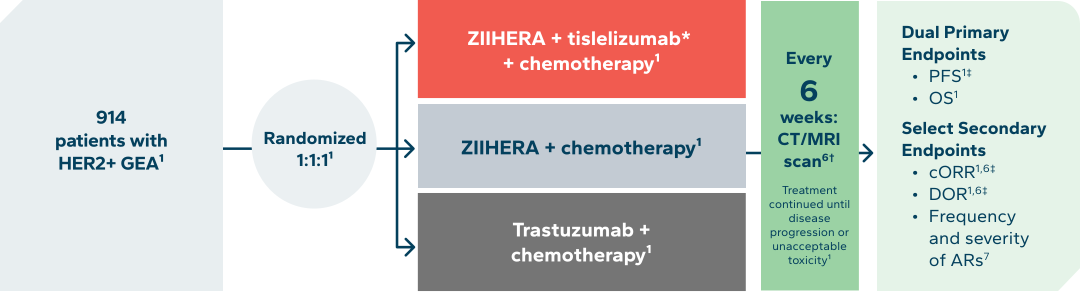
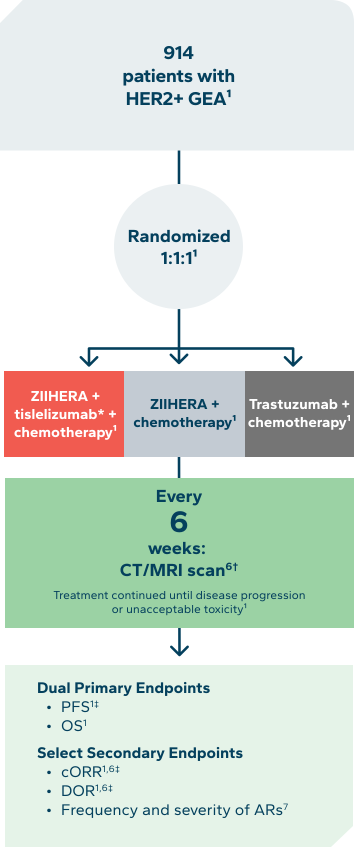
Serious adverse reactions occurred in 59% of 294 patients in HERIZON-GEA-01. Serious adverse reactions in > 2% of patients included diarrhea (17%), IRR (5%), vomiting (4.8%), hypokalemia (4.4%), acute kidney injury (3.7%), pneumonia (3.7%), nausea (2.4%), decreased appetite (2.4%), and anemia (2.4%). Fatal adverse reactions occurred in 2.4% of patients and included acute kidney injury (N=2), cardiac failure, diarrhea, dehydration, hypovolemic shock and intestinal obstruction (all N=1).
Permanent discontinuation of ZIIHERA occurred in 13% of patients. Adverse reactions that resulted in permanent discontinuation of ZIIHERA in ≥ 1% of patients included diarrhea (4.4%) and ejection fraction decreased (2.7%).
The most common adverse reactions (≥ 20%) were diarrhea (83%), nausea (56%), decreased appetite (46%), vomiting (44%), hypokalemia (39%), fatigue (37%), rash (36%), peripheral neuropathy (27%), and IRR (25%).
ZIIHERA in combination with chemotherapy
Serious adverse reactions occurred in 49% of 305 patients in HERIZON-GEA-01. Serious adverse reactions in > 2% of patients included diarrhea (11%), vomiting (3.3%), decreased appetite (2.6%), pneumonia (2.6%), sepsis (2.6%), hypokalemia (2.3%), and nausea (2.3%).
Permanent discontinuation of ZIIHERA occurred in 10% of patients. Adverse reactions that resulted in permanent discontinuation of ZIIHERA in ≥ 1% of patients included ejection fraction decreased (2.0%), IRR (1.6%), and diarrhea (1.6%).
The most common adverse reactions (≥ 20%) were diarrhea (79%), nausea (54%), vomiting (44%), decreased appetite (40%), fatigue (36%), hypokalemia (33%), peripheral neuropathy (32%), IRR (25%), and rash (22%).
Pediatric Use
Safety and efficacy of ZIIHERA have not been established in pediatric patients.
Geriatric Use
ZIIHERA in combination with chemotherapy and tislelizumab-jsgr
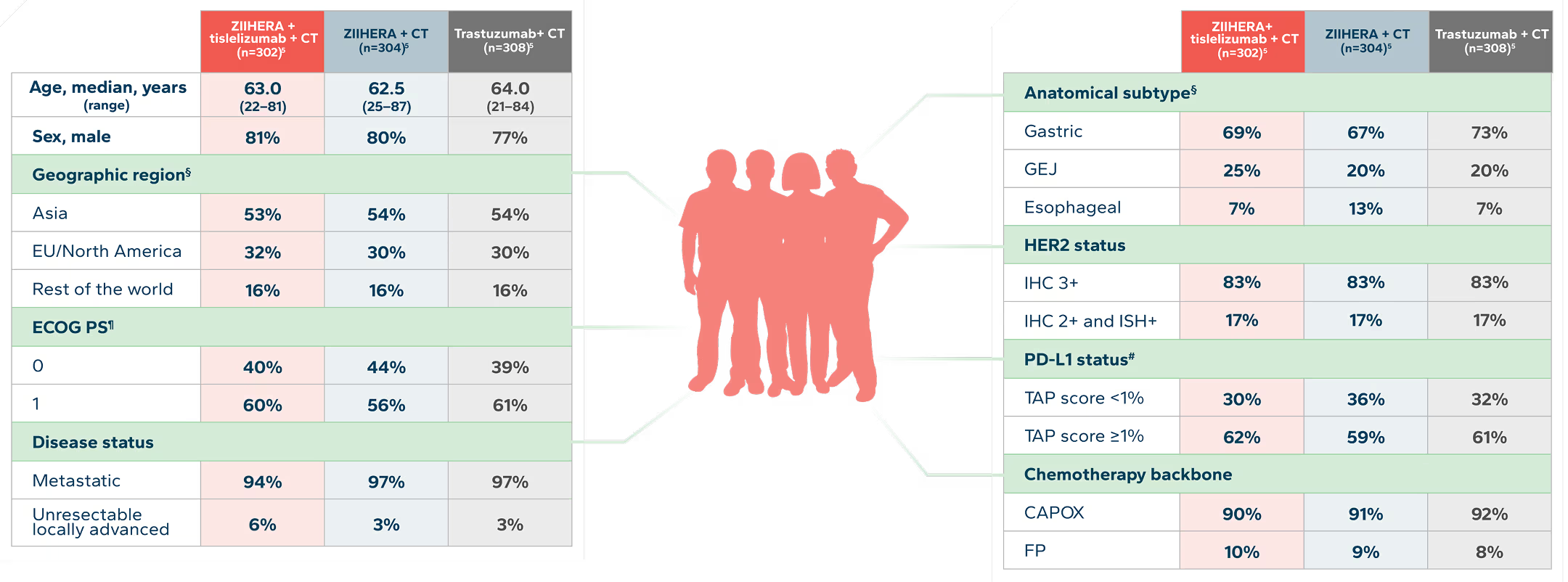
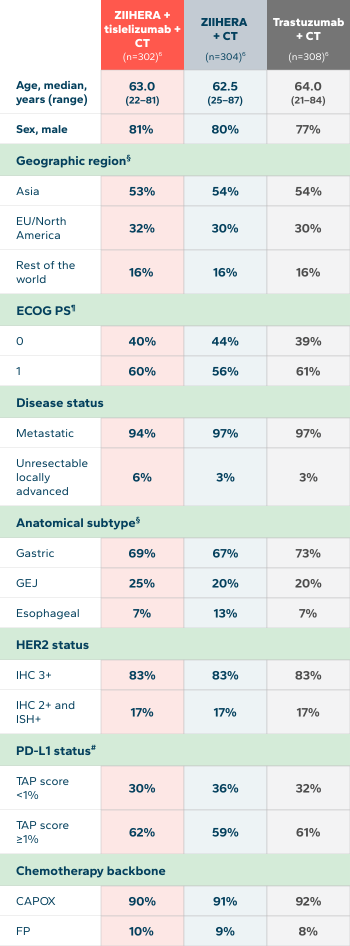
Of 302 patients randomized to ZIIHERA in combination with chemotherapy and tislelizumab-jsgr in HERIZON-GEA-01, there were 139 (46%) patients aged ≥ 65 years. One hundred and six (35%) were aged 65-74 years and 33 (11%) were aged ≥ 75 years.
There was a higher incidence of Grade ≥ 3 adverse reactions observed in patients aged ≥ 65 years (87%) as compared to younger patients (80%). The incidence of Grade 3 or 4 diarrhea was higher in patients aged ≥ 65 years (32%) compared to younger patients (20%).
There was an increased incidence of fatal adverse reactions in patients aged ≥ 65 years (4.4%); including acute kidney injury (N=2), cardiac failure, dehydration, hypovolemic shock and intestinal obstruction (all N=1), compared to younger patients (0.6%), including diarrhea (N=1).
ZIIHERA in combination with chemotherapy
Of 304 patients randomized to ZIIHERA in combination with chemotherapy in HERIZON-GEA-01, there were 130 (43%) patients aged ≥ 65 years. One hundred (33%) were aged 65-74 years and 30 (10%) were aged ≥ 75 years.
No overall differences in safety were observed between patients aged ≥ 65 years and younger adult patients.
Please click here to see the full Prescribing Information, including BOXED WARNINGS and Medication Guide.